If you’ve ever driven along Japan’s highways, you’ve probably seen Michi-no-Eki — those convenient roadside stations with parking, restrooms, and local souvenirs. But what you might not know is that many of these stations are being reimagined as critical hubs for disaster response.
Originally built to give travelers a safe place to rest and to boost regional tourism, Michi-no-Eki now play a growing role in Japan’s disaster preparedness strategy. Their large parking lots can host Self-Defense Force vehicles, and their facilities can quickly transform into coordination points for rescue, recovery, and aid operations.
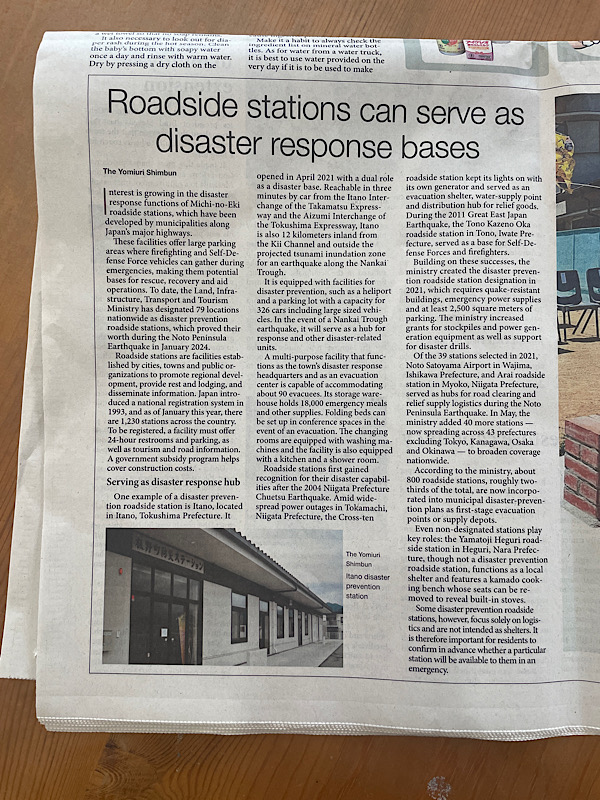
Take Itano Roadside Station in Tokushima Prefecture as an example. Opened in 2021, it was designed from the start to double as a disaster base. Just minutes from the expressway, it’s fully equipped with quake-resistant structures, emergency power, and water supply systems. Inside, you’ll find storage for 18,000 emergency meals, space for folding beds, washing and shower rooms, and even a kitchen — everything needed to support evacuees and relief teams during a crisis.
This isn’t just theory. After the 2004 Niigata Chuetsu Earthquake and the 2011 Great East Japan Earthquake, roadside stations proved their worth by keeping lights on with their own generators, providing clean water, and serving as command posts for disaster response. The Tono Kazeno Oka station in Iwate Prefecture, for example, became a crucial base for the Self-Defense Forces.
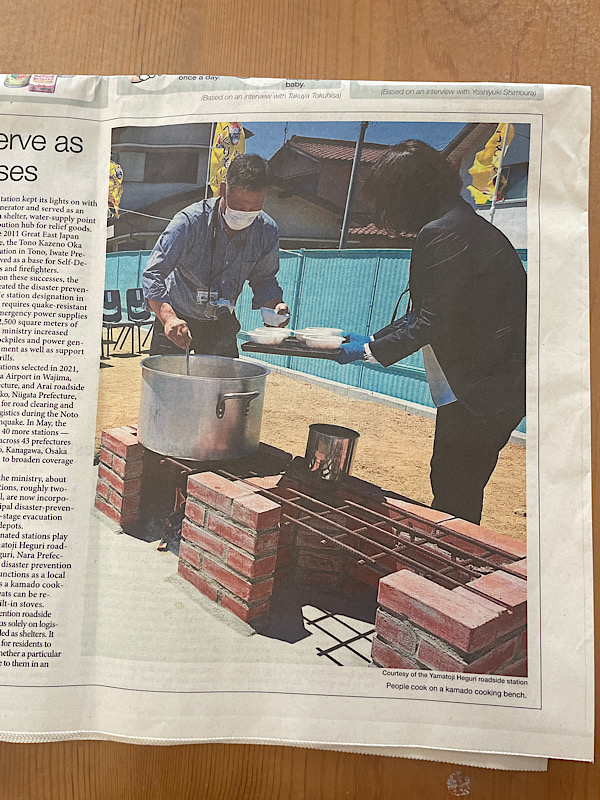
As of early 2025, 79 stations nationwide are officially designated as disaster prevention bases, and more are being added. These sites are built to high standards — think quake-resistant buildings, large storage areas, and the ability to generate power for days. Still, not every Michi-no-Eki is intended to be a shelter. Some, like the Yamatoji Heguri station in Nara Prefecture, focus on supporting logistics or offering community resources, such as kamado cooking benches for outdoor meal preparation.
The takeaway? Roadside stations are evolving into a vital part of Japan’s emergency infrastructure. Whether you’re a resident or a traveler, it’s worth knowing which stations near you can serve as a lifeline when disaster strikes. Because in Japan — a country where earthquakes, typhoons, and floods are part of life — preparedness isn’t just about having supplies at home, it’s also about knowing where to turn when the unexpected happens.
 Tamagawa Disaster Recovery